These records are found in the online catalog of The Mariners’ Museum and Park in Newport News, Virginia. Uncurated search results are presented to give researchers and interested readers an idea of whether the museum’s archives contain information about this vessel and whether it may be worthwhile to visit the museum’s catalog search page for further investigation. Uncurated results may be inaccurate or incomplete.
Mariners Museum online catalog search, July 12, 2026. Search phrase: "Cornet". Catalog returned 11 records; this selection table includes 11 records fetched through catalog result pages.
Use these buttons to send uncurated search results to your own app or text document for further research. First, check the box for any row, or click "Select All" then uncheck any rows. Then click "Show Selections". You can then copy your selections from the text box and past them into your app.
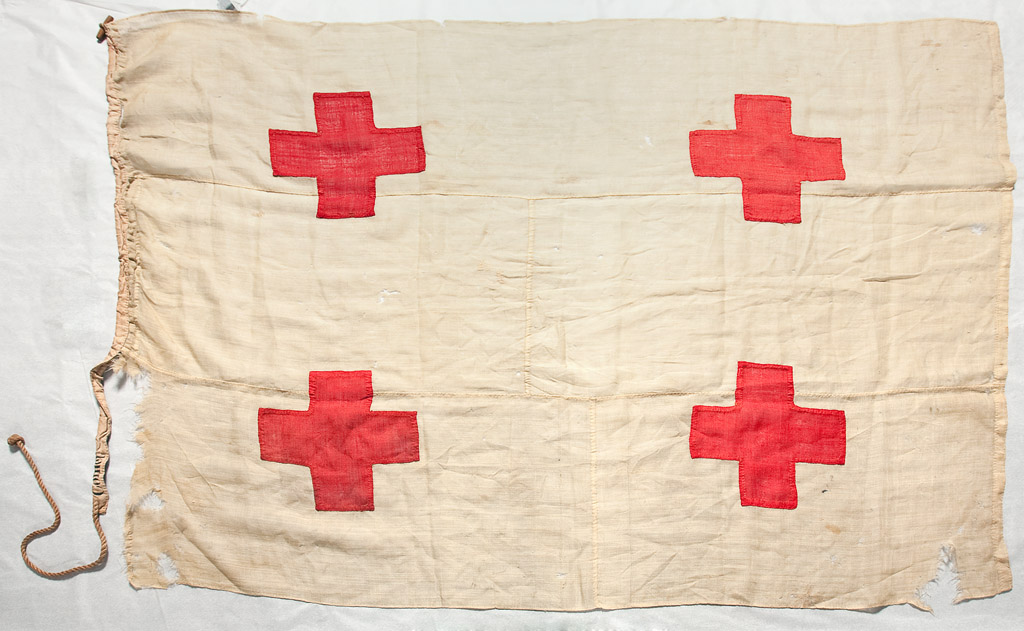
SHORT DESCRIPTION: Confederate States Navy cornet signal flag. A white field (54" x 72") designed with four Greek style crosses, one located in each quarter of the ensign. The header is inscribed with "Cornet". This signal was used when the Commander of a flotilla ordered his subordinate commanders to come aboard for an officer's conference. NOTES: This flag is one of a nine acquired by secretary of the navy Gideon Welles during the civil war.
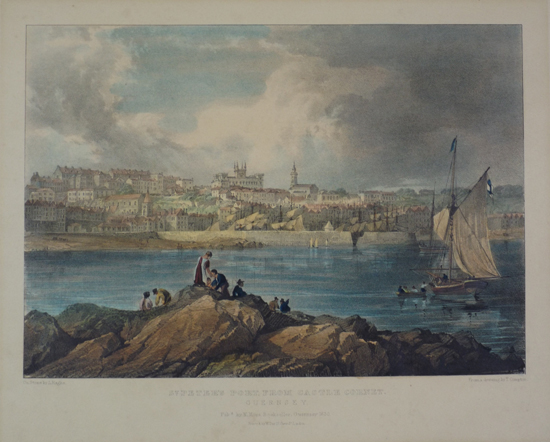
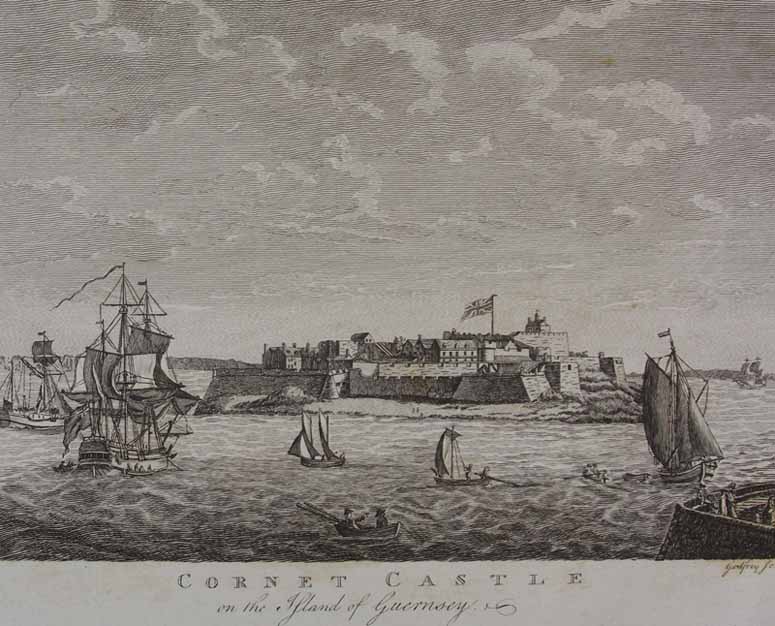
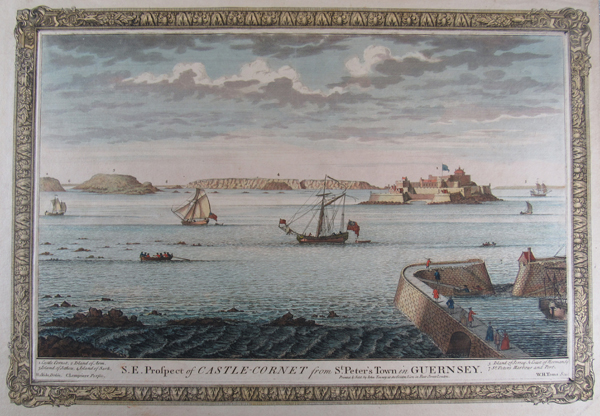
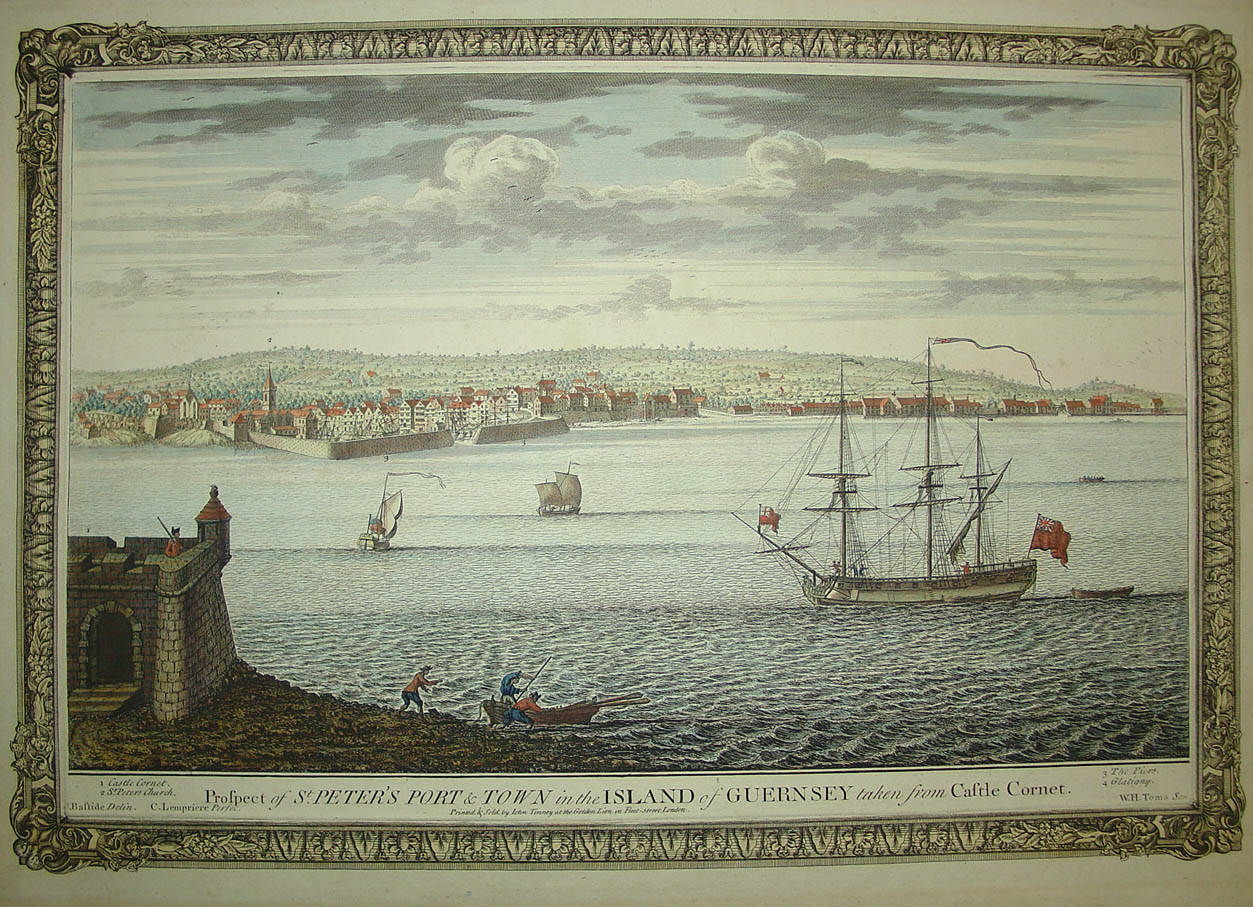
ENGLAND, LONDON, FLEET STREET, GOLDEN LION; RELATED PLACE: CHANNEL ISLANDS, GUERNSEY, ST PETERS POR
NOTES: Prospect of St. Peter's Port and the town in the Island of Guernsey taken from Castle Cornet. Guernsey is one of the larger islands in the British Channel Islands. St. Peter's port is the chief town and has the second largest port.
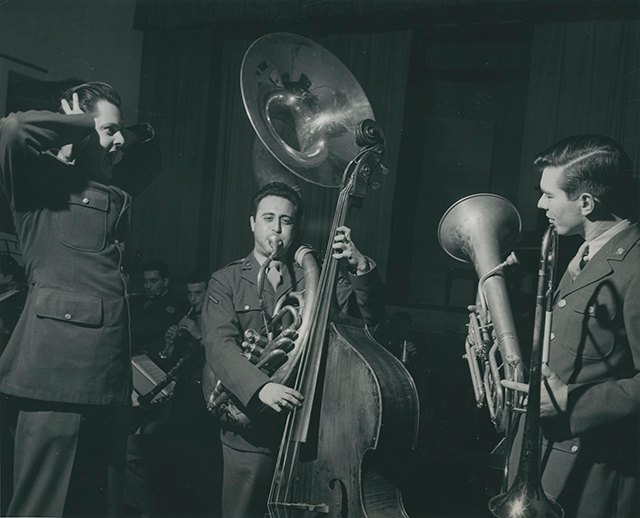
E-11117 - T/4William (Billy Boy) Roberts, 32626320, Long Island, N.Y.; Pfc. Aronald (Fish) Fishkind, 32626534, Freeport Long Island, N.Y., and T/5 James Marshall, 33427355, Ford City, Penna. Photo taken at HRPE, Newport News, Va. 12-4-44 Official Photograph, U. S. Army Signal Corps, HRPE, Newport News, Va.
One musician in uniform holds a trombone and a cornet while another appears to be playing a tuba and a stand up bass. A third man in uniform stands at the left with his hands over his ears, apparently screaming.
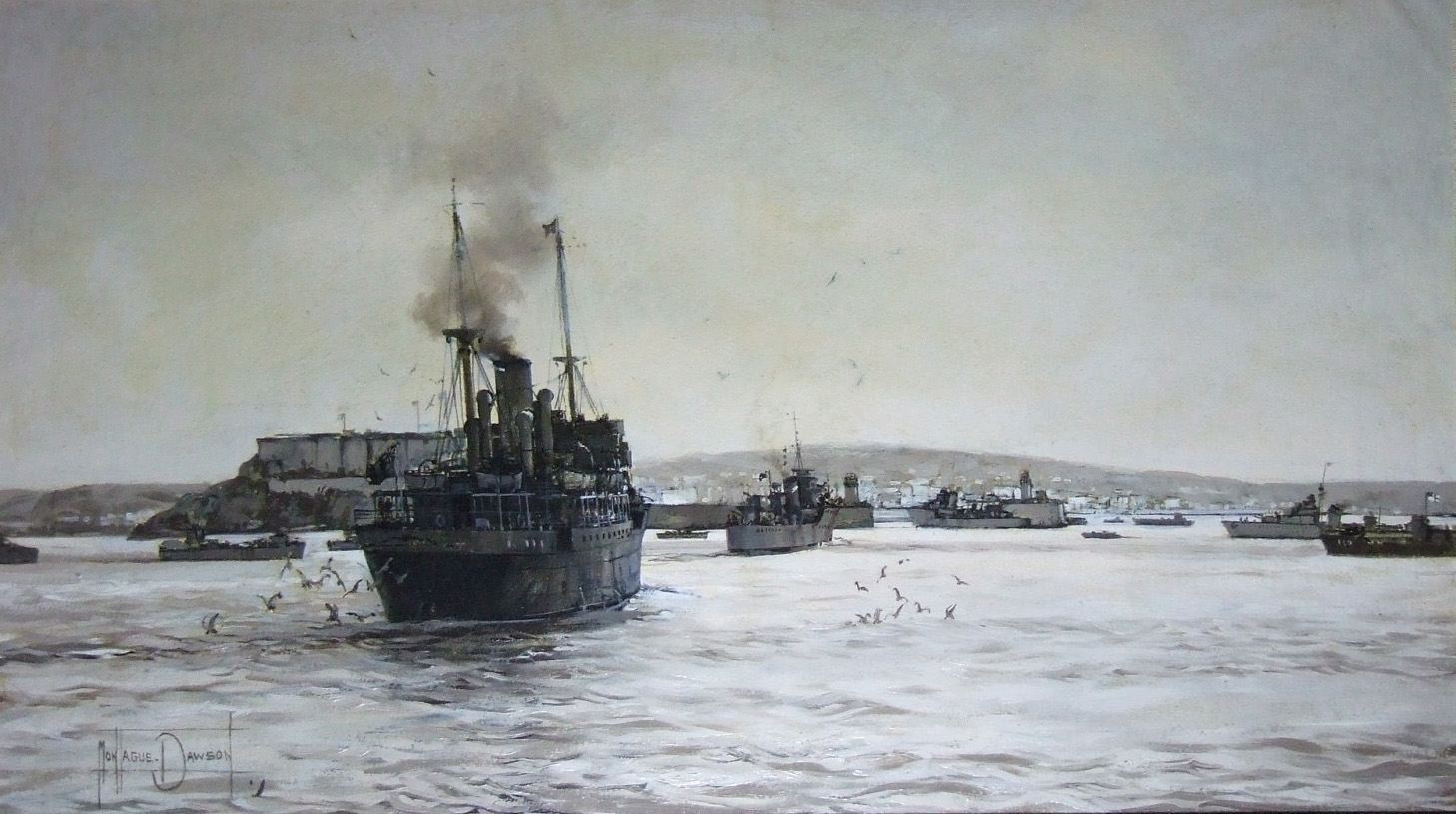
MILFORD-ON-SEA - HAMPSHIRE - ENGLAND - Artist; ST. PETER PORT - GUERSNEY - ENGLAND - Related Place
SHORT DESCRIPTION: Monochrome oil painting titled 'Food from Britain for the People of the Channel Islands after the long occupation by the Germans' by British war artist Montague Dawson. Painted in 1945. The image shows St. Peter Port, in Guernsey, as the first relief vessels arrive on May 14, 1945. Castle Cornet is seen at the left, just behind a large ship, and the Castle breakwater lighthouse sits to it's right. The main harbor is at the center and the town itself is seen to the right of the picture. The New Jetty sits to the right of center just behind a small ship. Dawson shows many vessels, large and small, heading into the port entrance between the Castle breakwater lighthouse and the New Jetty. NOTES: This painting was used as an illustration in the June 9, 1945 issue of The Sphere, pages 264-265. The text supporting the image may read: THE LIBERATION OF THE CHANNEL ISLANDS. And the arrival of food ships from Britain. Food from Britain for the people of the Channel Islands after the long occupation by the Germans. The scene at St. Peter Port, in Guernsey, as the first vessels arrived on May 14th. Castle Cornet is seen on the left just behind the large ships in the foreground: The main harbour is seen in the center: and the town on the right of the picture, these were the first vessels from Britain since the year 1940. - Drawing by Montague Dawson NOTES: This was one of eleven paintings in accession 1975.03 that appeared in an exhibition put together by the Christopher Wade Gallery of 28 Bruton Street, London in 1969. The exhibition was opened by the Admiral of the Fleet, Earl Mountbatten of Burma. The title of the exhibition was ‘The Royal Navy at War 1939-1945, An exhibition of Sea Paintings by Montague Dawson, R.S.M.A., F.R.S.A.’ There is a catalog for this exhibition in the Museum’s artist file. The title of the painting given in the exhibition was "The Liberation of the Channel Islands."
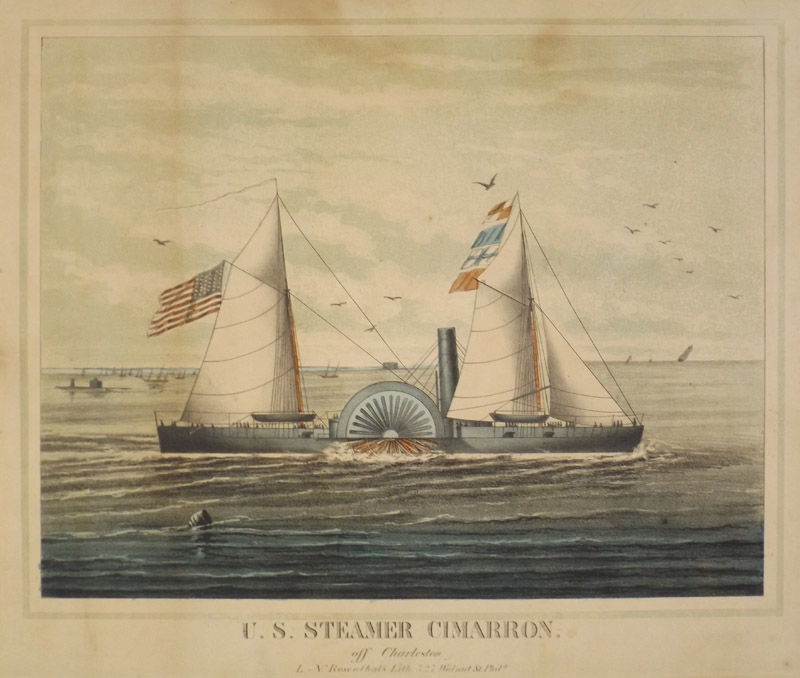
327 WALNUT STREET - PHILADELPHIA - PENNSYLVANIA - UNITED STATES - Publisher; CHARLESTON - SOUTH CAROLINA - UNITED STATES - Related Place
SHORT DESCRIPTION: Colored lithograph depicting the US Steamer CIMARRON underway on calm water with its signal flags, US Flag and sails all flying. A floating barrel is seen in the foreground, sea birds and an ironclad warship at center, and the background includes various sailing vessels along the horizon. NOTES: According to the 1861 'Code of flotilla and boat squadron signals for the United States navy' the signal flags read: cornet, 2, 8, 1. Direction #18 state: The Naval Cornet hoisted at the fore, with signal flags under it, will indicate the number of the vessel as recorded in the Naval General Signal Book. The 1861 indicates number 281 is the Seminole - unable to find a signal book with a later publication date. The 'Register of the commissioned, warrant. and volunteer officers of the Navy of the United States, including officers of the Marine Corps...to January 1, 1863' also spells the ship's name Cimmerone. NOTES: The L.N. Rosenthal firm moved to 327 Walnut Street in Philadelphia in 1863. A fire struck on September 15, 1872 and the firm closed and moved to Chicago a short time later. VESSEL INFORMATION - VESSEL NAME: CIMARRON VESSEL TYPE: double-ended side wheel gunboat BUILDER: D. S. Merschon BUILDER LOCATION: Bordentown, New Jersey DIMENSIONS: 860 tons displacement, 205' length, 35' beam, draft 9' CAPTAIN: CDR. Maxwell Woodhull SERVICE DATES: 1862-1865; Laid down, date unknown, Launched, 16 March 1862. Commissioned USS Cimarron, 5 July 1862 FATE: Decommissioned 17 August 1865, at Philadelphia Navy Yard. Struck from the Naval Register, date unknown. Sold 6 November 1865 Final Disposition, fate unknown. VESSEL HISTORY: Octorara Class Sidewheel Gunboat, laid down as the sidewheel double-ended steam gunboat Cimerone and name changed to Cimarron at unknown date. Outfitted at Philadelphia Navy Yard. During the Civil War USS Cimarron was initially assigned to the James River in support of Army operations where she engaged the Confederates at Harrison's Landing, 28 July 1862, Fort Powhatan, 31 July 1862 and Swan Point Battery, 4 August 1862. Joined the South Atlantic Blockading Squadron at Port Royal, S.C. 13 September 1862. Operated in coastal and inland waters along the coast of South Carolina, Georgia and Florida. Participated in the engagement of Confederate batteries on the St. John River, FL., 17 September 1862. From January 1863 to 3 August 1865 Cimarron continued blockade duty and captured three prizes. Fired on Confederate troops ashore on two occasions, 23 June and 8 July 1863. Joined in the attacks on Fort Wagner in Charleston Harbor, S.C., 17, 20 and 21 August 1863. During January and February 1864 operated in the Stono River, S.C.
PENNSYLVANIA, PHILADELPHIA; RELATED PLACE: NEW YORK, PLATTSBURGH
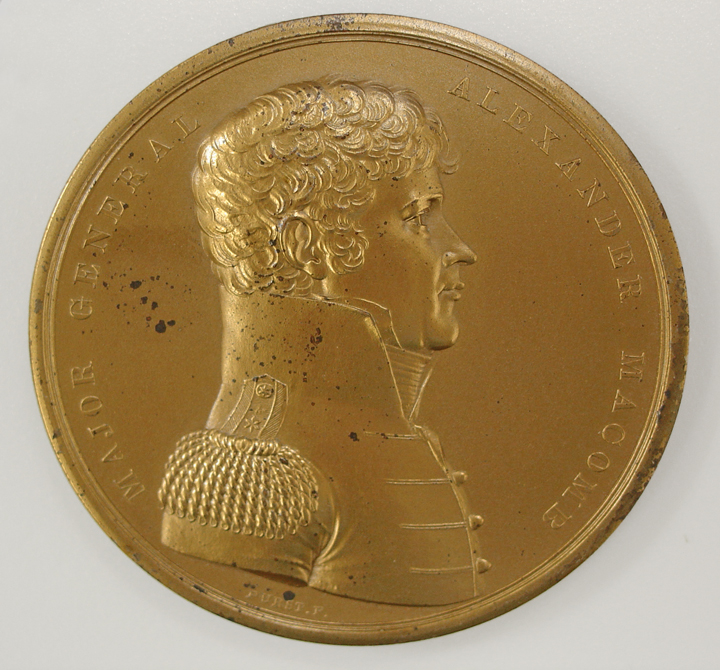
SHORT DESCRIPTION: On the obverse is a bust portrait of General Macomb in profile, proper right. On the reverse is depicted a scene of the American Army repulsing the British troops striving to cross the Saranac River. The left shows Plattsburgh in flames and to the right is the naval battle on Lake Champlain. BIOGRAPHICAL INFORMATION: Alexander Macomb was born in Detroit, April 3, 1782. Entered the army as cornet of cavalry, 1799, became brigadier general, January, 1814. He gained the victory of Plattsburgh over the British troops commanded by the governor-general of the Canadas, General Sir George Prevost, September 11, 1814. He died at the head-quarters of the Army in Washington, June 25, 1841.
61 HANOVER STREET - BOSTON - MASSACHUSETTS - UNITED STATES - Publisher
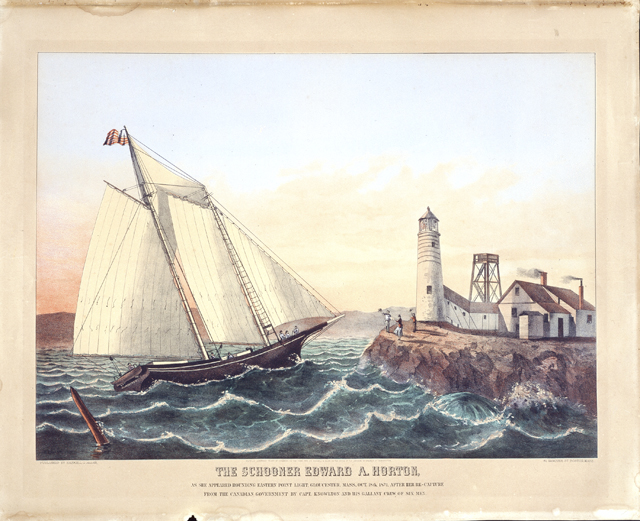
VESSEL INFORMATION - VESSEL NAME: EDWARD A. HORTON VESSEL TYPE: schooner SERVICE DATES: 1870- SHIP OWNERS: Daniel Allen & Son VESSEL DIMENSIONS: 66 tons VESSEL HISTORY: [From downtosea.com] On September 1, 1871 the Gloucester fishing schooner Edward A. Horton, while on a trip to the Cape Shore for mackerel, was seized by a Canadian Cutter for fishing inside the three mile limit. She was taken to Guysborough, Nova Scotia, stripped of her sails and secured to a wharf, where she was to be held in custody until a court could be convened to decide the case. The Horton was not the first Gloucesterman to be so impounded and on both sides of the border tempers flared over the controversial issues involved. Since her owners had a vessel seized the previous year they held but little faith in Dominion justice and foresaw months of litigation with the possible loss of the schooner as the final result. However, Captain Harvey Knowlton, himself a part owner in the vessel, was determined that the Horton would not end her days flying the "red duster" like so many other Gloucester schooners before her and going home to Cape Ann, as if abandoning any hope of recovering his vessel, he returned to Canso, N. S., three weeks later. In the home of Captain "Spud" McDonald, a notorious smuggler, plans were laid to boldly recapture the schooner. A crew consisting of Daniel Richards, Peter Gillis, Malcolm McCloud, D. McIsaac, John Penny and Charles Webber, Grand Banks fishermen, was enlisted in Canso for the venture. On October 3rd, they made their way through the woods 18 miles to the outskirts of Guysborough where they hid themselves in a barn. Captain Knowlton, in disguise, entered the town where he stayed several days, visiting the wharf where the vessel lay, locating the loft where the sails had been stored and sounding the channel. On Sunday, October 8th conditions were right. A clear moonless night with a fresh northwest breeze favored an outbound vessel. The plotters left their hiding place and slipped into town at 11 p.m. Quietly, they broke into the sail loft and found the Horton's suit of canvas. Once on the schooner's deck the bundles were opened and deft fingers laboriously bent the sails to spars and mast hoops. One delay was encountered when it was discovered that they had taken some sails belonging to another vessel, thus making a second visit to the loft necessary. The plotters were unmolested. There was no alarm. There were not guards. Why guard a vessel stripped of sails and aground except at high tide? The crafty captain had planned this night's work well. The tide was flooding and when the sails were finally bent the schooner was all but waterborne. There was not need for talk, this crew knew their tasks. Moorings were slipped, a warp run out, and the vessel hove astern. At 2:30 a.m. the Horton was afloat and willing hands grasped the halyards to make sail. On October 9th, early morning risers stared in red faced astonishment when they realized the vessel was cut out. Once outside Little Canso, the Horton stood offshore expecting pursuit by Canadian Cutters. She had been refitted just two days before her capture so there was ample water and provisions aboard for an extended cruise if the need should arise. On the 11th a severe easterly gale blew up and for two days the schooner was hove to on George's Bank. When the storm abated, Captain Knowlton piled on sail and set his course for Cape Ann. In the meantime, telegraph lines had carried the news of the escape to Gloucester and the town seethed with excitement. International relations became tense. Fearing that a Canadian Cutter might attempt to intercept the schooner in Massachusetts Bay, leading citizens of Gloucester, headed b Collector of Customs Fitz J. Babson prevailed up the Government to dispatch the U. S., Revenue Cutters McCullock, Fortune, Leyden, Mahoning and Hamlin to cruise along our coast in search for the Horton. They were under orders to allow no vessel to interfere with her, but to bring her into port at any hazard. It was probably fortunate that they saw neither the Horton nor any Canadian craft. After picking up Cape Cod Light, the Horton stood across Massachusetts Bay, passing Eastern Pint into Gloucester Harbor on Wednesday, October 18th. At 7:30 p.m. she came to anchor in the stream and the booming of a cannon at Rocky Neck announced her arrival to the waiting town. The news spread like wild fire! School bells were rung and the streets were filled with cries of "The Horton's in! The Horton's in!" It was an evening Gloucester will long remember. The next day, Thursday, was declared a holiday, schools were closed and all business stopped. Throughout the day crowds gathered on the wharves to gaze upon the schooner and to congratulate Captain Knowlton and his crew. In the evening a torch light procession paraded the streets headed by the Gloucester Cornet Band and at a congratulatory meeting held in Town Hall, Captain Knowlton and his volunteer crew were presented with a purse of $1000 subscribed by the citizens of the joyful town.

 Full-size image
 lp3686
 Full-size image
 le60
 Full-size image
 11117
 Full-size image
 lp855
 Full-size image
 1940.1106.000001